How Balers & Compactors Improve Sustainability
The best way to create a more sustainable waste setup is by knowing what waste you have, separating it properly, and handling it in a way that gives more of it a chance to be recycled.
Balers and compactors are perfect for doing just that. Used well, they can make waste easier to sort, store, and move into the right waste stream. For any business trying to reduce landfill waste and build a recycling process, cutting unnecessary collections in this manner improves sustainability within day-to-day operations, and move towards a zero waste to landfill goal.
What does zero waste to landfill mean?
Zero waste to landfill doesn't mean producing no waste at all. Instead, it means sending as little waste to landfill as possible by separating recyclable materials and making better decisions about how waste is handled on site.
The aim is to keep more material out of landfill and move more of it into reuse, recycling, or recovery instead. For many businesses, this is a working target rather than a fixed end point.
Why should businesses try to reduce landfill waste?
There are a few reasons, the most obvious being the environmental benefits. Sending less waste to landfill means more material has a chance to be reused or recycled instead. It also reduces the long-term environmental impact that comes with burying waste rather than recovering its value.
There are practical business reasons too. Landfill is expensive, and the cost becomes harder to justify when recyclable materials are still ending up in general waste. Reducing landfill waste can help businesses lower disposal costs, cut landfill tax exposure, and make better use of materials that may have a recycling or rebate value.
How do balers and compactors support sustainable waste management?
Balers and compactors help you handle waste more efficiently by making it easier to sort waste for recycling. This makes them particularly useful for businesses working towards zero waste to landfill. If waste is loose, mixed, and taking up too much space, it's harder to separate properly and easier for recyclable material to end up in the wrong container.
Once waste is sorted and compacted, the process is easier to manage. Not only does storage become much tidier, but recyclable streams are easier to keep separate from general waste, reducing the amount that needs to go to landfill overall.
How do balers help improve recyclability?
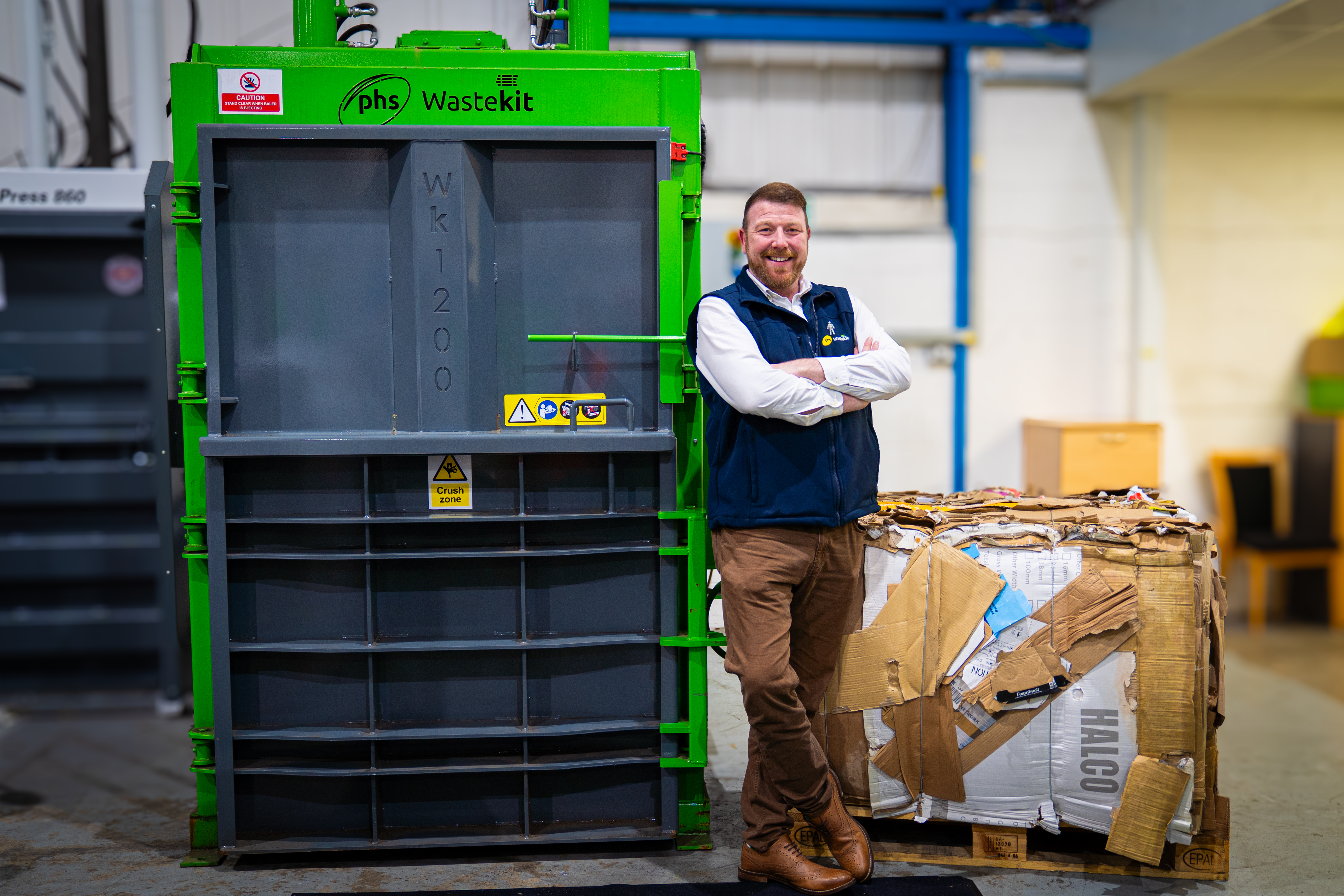
Balers are especially useful for materials like cardboard and plastic. Instead of letting these build up loose in bins or storage areas, a baler compresses them into dense, manageable bales.
That can improve recyclability in a few ways, by:
- Helping keep recyclable material separate from general waste
- Reducing contamination
- Making storage easier
- Giving recyclers a cleaner, more consistant material stream
There can also be a financial benefit. If your cardboard or plastic is clean and properly separated, it may be possible to sell waste that would otherwise have been thrown away. If you want to explore that side of the process, our guide to cardboard recycling rebates is the next step.
How do compactors help reduce landfill waste?
Compactors do a slightly different job to balers. They're usually used for general waste rather than recyclable streams, and their main role is to reduce the volume of that waste on site.
While different, they're still important for sustainability. When general waste takes up less space in your warehouse, you can often reduce the number of collections you need. In the long run, this also means less space taken up in landfill, as well as less fuel use for regular collections.
A compactor on its own will not create a zero waste to landfill system, but as part of a wider sustainable waste management setup, they can help businesses manage residual waste more efficiently while keeping recyclable material elsewhere.
What are the wider sustainability benefits?
The environmental benefit is not only about achieving your ESG goals. Better handling can improve the whole waste process. In practice, businesses often see benefits such as:
- Fewer waste collections
- Less wasted storage space
- Lower landfill tax exposure where less waste is being sent to landfill
- Cleaner recycling areas with less overflow
- A better chance of recovering value from materials such as cardboard
The right equipment won't fix a poor waste process on its own, but it can make a good one much easier to run.
If your business is trying to reduce landfill waste and build a more sustainable waste management system, we can help you assess the waste you're producing now, and inform on what equipment would make that easier to handle.
Zero waste to landfill usually starts with better sorting, and balers help make recyclable material easier to handle. Compactors help control general waste and reduce unnecessary collections. Used together, they can support a more practical recycling process that makes your ESG goals easier to achieve, and reduces landfill waste.